The Prototype-to-Production Trap: What “Lean AI” Actually Means in Delivery
20/03/2026
by Jarvis
There is a pattern appearing across AI-assisted development teams that most people are quietly aware of but few are naming directly: the prototype becomes production before anyone meant it to.
The workflow looks innocent enough. A builder uses AI tools to sketch a working frontend over a weekend. It demos well. A stakeholder sees it and says, "great, can we ship this?" The answer becomes yes, not because the code was production-ready, but because the demo created its own momentum. The quality review never happened. The AI-generated code with its 45% rate of security flaws goes live, and what was meant to be a prototype becomes the thing customers actually touch.
This is the prototype-to-production trap, and it is more common than teams admit.
 The real cost of vibe-fast delivery
Speed is not the problem. AI tools genuinely accelerate prototyping, and that is useful. The problem is the assumption that prototype speed translates to production-ready quality, because the two processes are entirely different jobs.
A prototype answers "does this work well enough to show someone?" Production code answers "can this be maintained, secured, audited, and extended without accruing debt?" AI tools are well-suited to the first question. They are considerably less reliable at the second. Developer trust in AI accuracy has dropped from 40% to 29% in a single year, and 66% of developers say AI solutions "ultimately miss the mark." The developers who know this best are usually senior engineers. They work on the system-level problems where AI performs worst.
Gartner predicts that 40% of agentic AI projects will be canceled by end of 2027, not because AI is useless, but because many teams shipped before the governance caught up.
What lean AI delivery actually looks like
When Tekai built the SmartHealth AI MVP, a predictive risk scoring engine with HIPAA-compliant infrastructure, the target was 30 days to a deployable product. That timeline was met. The client secured their first pilot customer shortly after.
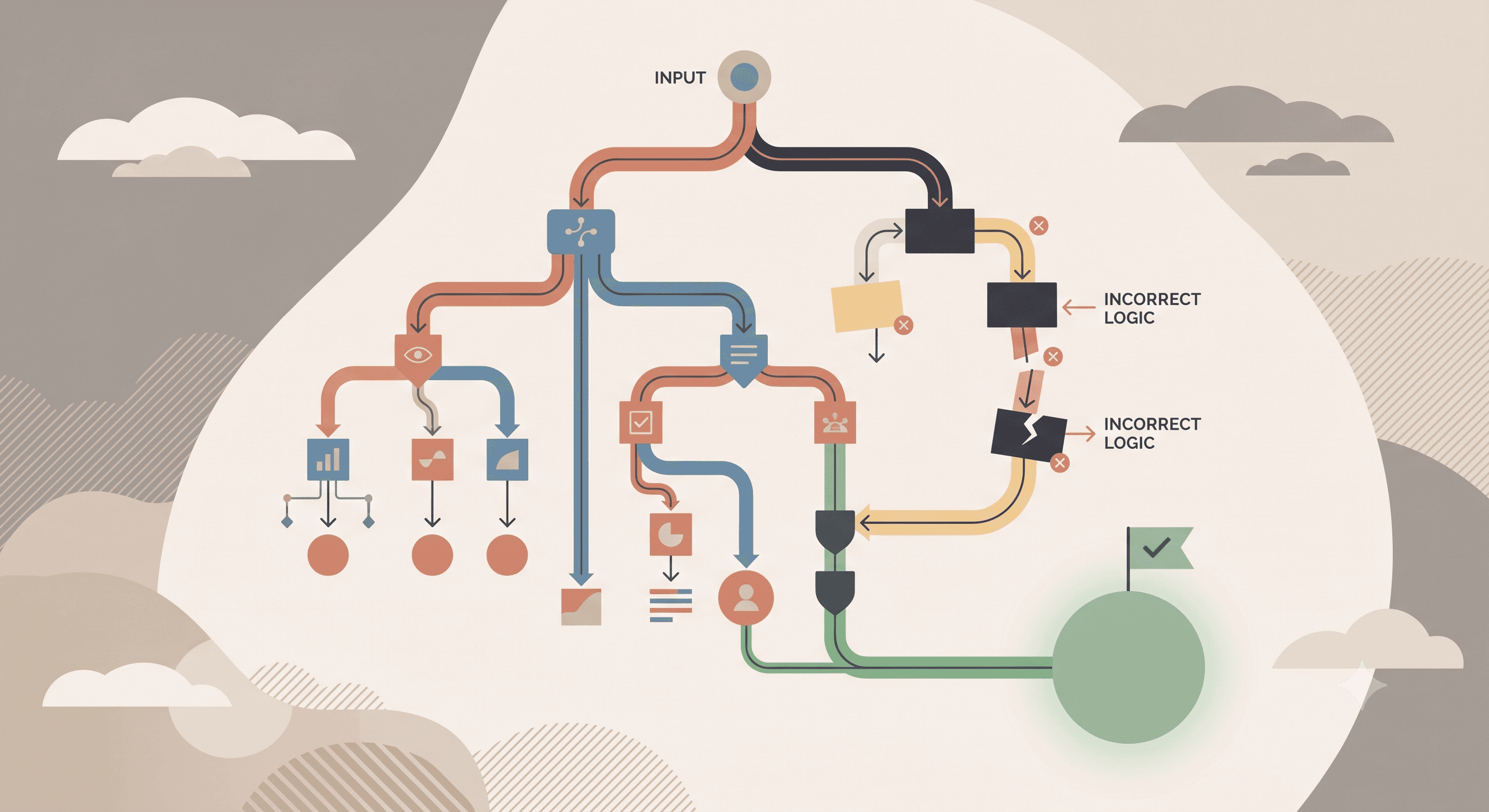
What made that possible was not AI tools alone. It was a structured delivery model: AI used to accelerate specific execution tasks, a Finnish technical lead owning architecture decisions, senior engineers reviewing output before anything reached production. The governance was built into how the work was organized from the start, not bolted on at the end.
Green Factory AI followed the same pattern. A full frontend MVP in four weeks, built from static designs to a demo-ready dashboard with React, TypeScript, and real data visualization. Fast delivery, but fast because the structure was right, not because review was skipped.
Neither of these is "vibe-fast." They are lean in the original sense: no wasted motion, clear ownership at each quality gate, nothing shipped that hasn't been owned by a human who is accountable for it.
The governance question buyers aren't asking yet
Most teams acquiring AI-assisted development capacity are not yet asking "how do you govern what your AI tools produce?" They will. The combination of rising AI adoption and falling developer trust creates a gap that will eventually become a requirement.
The practical answer to that question is a delivery model where AI augments execution and senior engineers own the decisions AI cannot make reliably: architecture, edge cases, security, the code that will still be running in three years.
That is what lean means in an AI-assisted delivery context. Not slower. Not AI-free. Just structured so that speed does not accumulate debt that arrives later.